Virginia Names First Director of Outdoor Recreation — and Southside Virginia Has Plenty to Gain
Virginia’s rivers, trails, mountains, parks and open spaces have always been among the Commonwealth’s greatest natural assets. Now, state leaders are putting increased focus on their value as economic assets as well. Governor Abigail Spanberger has appointed Heather Barrar as Virginia’s first-ever Director of Outdoor Recreation, creating a position specifically focused on strengthening the Commonwealth’s outdoor recreation economy, supporting tourism-dependent communities and using Virginia’s natural assets to help drive economic development.
And perhaps nowhere are the possibilities more apparent than in Southside Virginia.
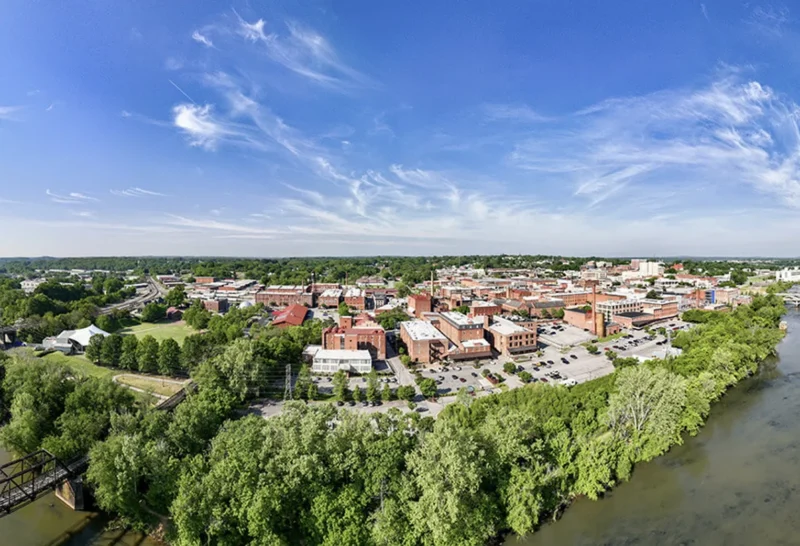
Governor Spanberger announced Barrar’s appointment at Danville’s new Riverfront Park, an appropriate setting for an initiative that seeks to bring conservation, recreation, tourism and economic development together. The park, which opened in May 2026, connects directly to Danville’s Riverwalk Trail and is part of the ongoing transformation of the city’s riverfront.
Outdoor Recreation Is Big Business in Virginia
The creation of the position reflects a broader understanding of outdoor recreation: trails, rivers and parks aren’t simply amenities. They can also be important components of a community’s economy. According to the U.S. Bureau of Economic Analysis, outdoor recreation generated approximately $14.4 billion in value added to Virginia’s economy in 2024 and supported more than 126,000 jobs across the Commonwealth.
That economic activity reaches well beyond businesses traditionally considered part of the outdoor industry. Visitors who come to hike, bike, paddle, fish, camp or attend outdoor events also spend money at hotels, restaurants, retailers, gas stations, breweries and other local businesses. Virginia’s overall tourism industry is experiencing significant growth as well. Visitor spending reached a record $36.2 billion in 2025, while the Commonwealth welcomed a record 46.6 million overnight visitors. Barrar’s appointment creates a statewide position focused on connecting those opportunities.
What Will The Director of Outdoor Recreation Do?
Barrar has been charged with developing a statewide outdoor recreation economy strategy informed by the communities and businesses that participate in that economy. Her work is expected to bring together several areas that have often been addressed separately, including economic development and business growth, tourism, conservation and natural-resource stewardship, workforce development, active transportation, public health and quality of life, and community planning and resilience.
Barrar brings a background particularly suited to that intersection. A trained forester and certified arborist, she holds a B.S. in Forestry and Recreation Management from Stephen F. Austin State University and a master’s degree in Environmental Planning and Policy from Virginia Commonwealth University. Her career has included regional planning, community engagement and natural-resource stewardship.
Her stated vision is one in which “conservation, recreation and economic development reinforce one another.”
That distinction is important. The goal isn’t simply to attract more people to Virginia’s outdoor spaces. It is to determine how those assets can be protected and improved while creating sustainable economic opportunities for the communities surrounding them.
Listening to Virginia’s Communities
As part of the initiative, Governor Spanberger signed Executive Directive 3 establishing a statewide stakeholder process. Barrar will conduct a listening tour covering all 10 of Virginia’s tourism regions, meeting with communities to identify opportunities, challenges and priorities that can help shape the statewide strategy. Importantly, Southside Virginia will have its own listening session on November 16.
A new Outdoor Recreation Stakeholder Advisory Group will also bring together representatives from business, conservation, economic development, tourism, outdoor recreation, workforce development, health, planning and local government, along with representatives from 10 state agencies. For Southside Virginia communities, that creates an opportunity to make sure the region’s priorities are part of the statewide conversation from the beginning.
Why Southside Virginia Could Benefit
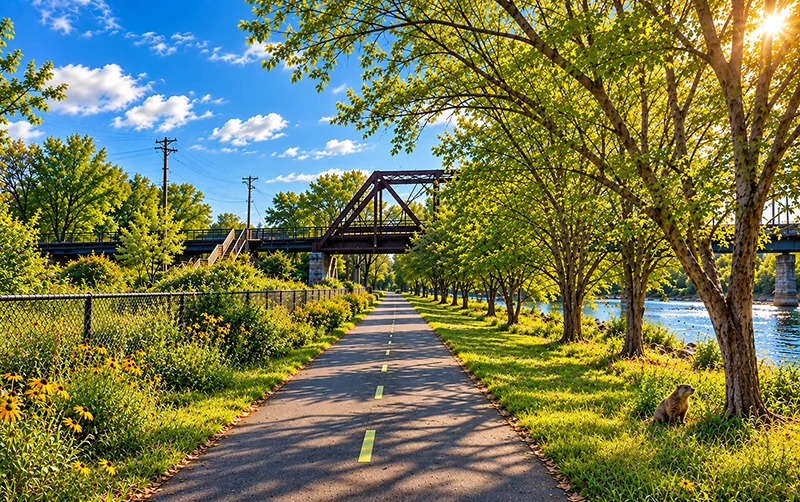
Southside Virginia already possesses many of the ingredients necessary to participate in a growing outdoor economy: rivers and lakes, trails, forests, rural landscapes, parks and communities with room to develop complementary businesses and visitor experiences. Danville provides a particularly timely example. The city has been steadily reconnecting development with the Dan River, using the riverfront as both a quality-of-life amenity and an economic-development asset. Riverfront Park connects directly to the Riverwalk Trail, while the trail itself links parks, historic sites, downtown attractions and businesses.
The next major piece could take that strategy significantly further. Danville is developing a whitewater channel using its historic canal, designed by Olympic kayaker and whitewater engineer Scott Shipley. Plans call for adjustable flows that could accommodate everyone from beginners to elite athletes, while also supporting competitions, community programming and swift-water rescue training. The project will connect with the Riverwalk Trail and surrounding riverfront development. That is precisely the type of project that demonstrates how outdoor recreation can intersect with tourism, placemaking, workforce attraction and economic development.
Southside Virginia’s Tourism Momentum Makes the Timing Even More Important
The appointment also arrives as tourism in the Danville-Pittsylvania County area is experiencing remarkable growth.
Visitor spending in Danville and Pittsylvania County reached $415.2 million in 2025 — a 50.9% increase over 2024. Tourism supported 3,941 jobs and generated $18.7 million in local tax revenue. For the second consecutive year, the region increased its share of visitors more dramatically than any other Virginia locality. That creates an important opportunity.
A visitor who comes to Southside Virginia for one attraction doesn’t necessarily have to remain a one-purpose visitor. Outdoor recreation can give travelers additional reasons to stay another night, eat another meal, explore another community and return for another trip. A trail becomes more than a trail when it connects visitors with downtown businesses. A river becomes more than scenery when it supports paddling, fishing, events and recreation. A park can become part of a community’s identity. And a collection of outdoor experiences can become part of a region’s economic-development strategy.
Outdoor Recreation Can Also Help Attract Residents and Businesses
The potential impact extends beyond tourism. Today’s economic-development competition increasingly involves more than available buildings, infrastructure and tax incentives. Communities also compete for people — the employees, entrepreneurs and families businesses need. That makes quality of life an important part of a region’s economic story.
Trails, parks, river access, cycling, paddling and other recreational opportunities contribute to the experience of living in a community. Investments that make a region more attractive to visitors can therefore also make it more attractive to prospective residents and workers. For Southside Virginia, that connection could be especially valuable as communities work to capitalize on new investment, employment growth and redevelopment. Outdoor recreation offers an opportunity to complement that growth with something the region already possesses: an abundance of natural assets.
Turning Natural Assets Into Sustainable Economic Opportunity
Virginia’s first Director of Outdoor Recreation will not create Southside Virginia’s outdoor assets. They are already here. The opportunity is to become more strategic about how they are connected, protected, promoted and incorporated into broader economic-development efforts. That could mean stronger connections between trails and downtowns, greater support for outdoor-oriented small businesses and entrepreneurs, improved access to rivers and public spaces, more regional tourism partnerships, and outdoor infrastructure that serves residents while simultaneously attracting visitors.
It can also mean looking at conservation and economic development not as competing priorities, but as strategies capable of supporting one another when development is planned thoughtfully. That is what makes Heather Barrar’s appointment particularly relevant to Southside Virginia.
The region is already demonstrating that economic revitalization does not have to stop at the doors of a new business, manufacturing facility, resort or downtown development. It can extend to the riverbank, the trailhead, the park and the communities that connect them.
With a statewide strategy now being developed and Southside Virginia specifically included in the listening process, the region has an opportunity to help shape what Virginia’s outdoor recreation economy becomes next. And with projects such as Danville’s Riverfront Park, Riverwalk Trail and planned whitewater channel already underway, Southside Virginia isn’t starting from scratch. It’s already building the kind of outdoor economy Virginia now wants to grow.